
FACE POETRY

Dovilė Tiriūtė is a make up artist and a social media influencer based in Vilnius, Lithuania. An influencer is a funny word to describe her, because instead of doing shopping hauls and discussing new products, Dovilė talks about mental health, body image, and self-love. If there’s anything truly worth influencing – that must be it.
Here are some quotes from the interview with Dovilė:
“My openness on Instagram basically started by accident. A year ago I was uploading Q&A stories on Instagram, and while most of the questions I received were makeup related, one stood out: “How are you always so positive and happy?”. This question started a storm within me. I understood that the image I was projecting wasn’t quite right because at the time this “constantly positive and happy” me was actually living in a shoddy apartment I couldn’t stand, going through a devastating divorce with someone I deeply loved, and drinking nearly every night in an attempt to quiet down my inner demons and escape the stress and anxiety.”

“We are taught at an early age that we need to earn love and it comes as news to us that we are actually worthy of it, and of everything else that we dream of, the way we are now. We shouldn’t need to earn or deserve love – we don’t owe anything to anyone, nor do we have to prove anything to anyone.”
You can read the full article in -What do people do? Issue 2 magazine, order at our online shop.
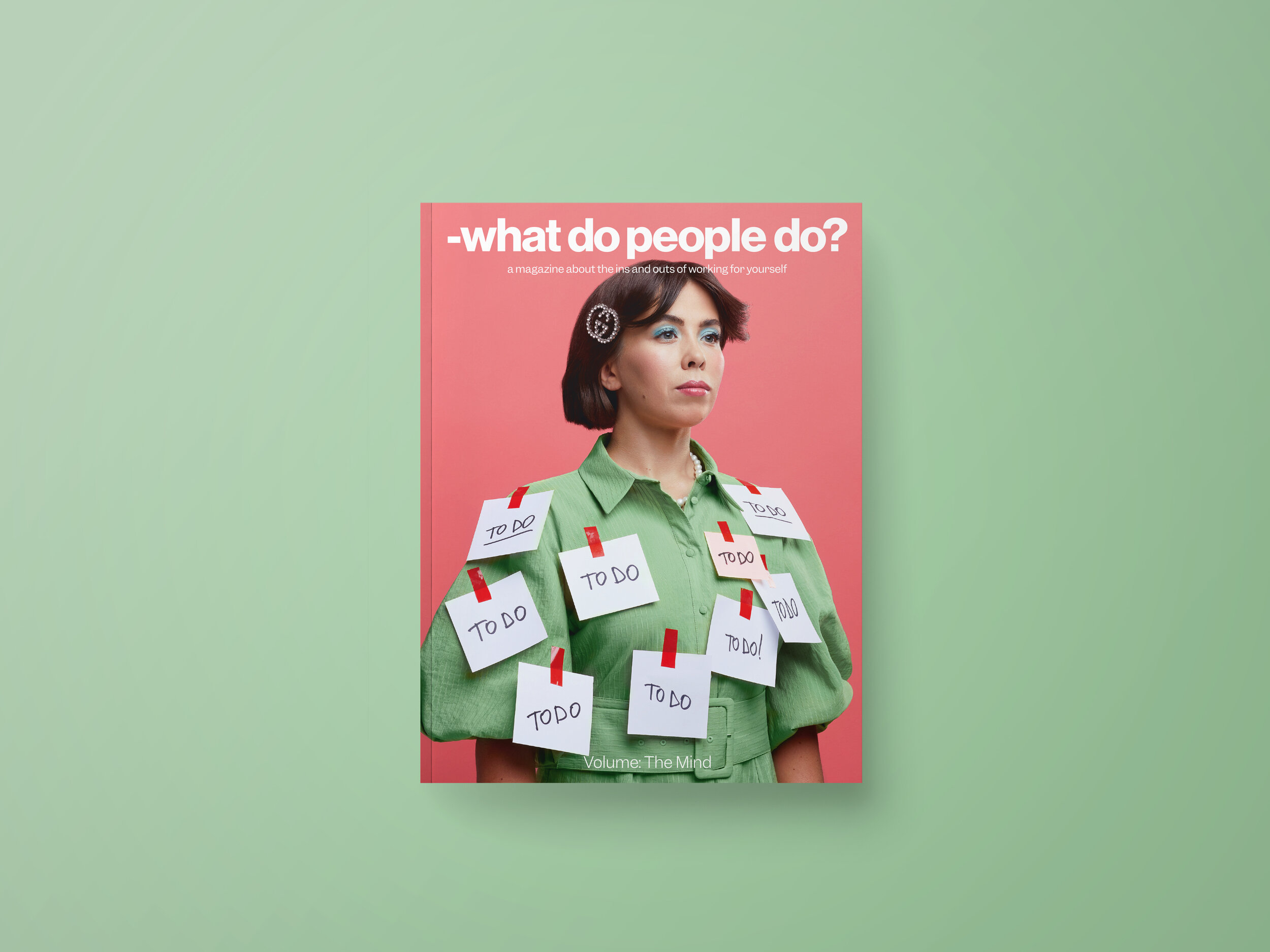

This is a magazine for creatives, founders and freelancers, and it’s focused on mental health.
It’s based on long form conversations diving deep into what usually gets left out in interviews. The bad days. The impostor syndrome. All sorts of fears and an overwhelming anxiety that follow every brave choice a person ever makes.
From essays about the millenial generation working to a point they find themselves too busy to have sex, to vulnerable first person letters talking about changing professions, making bold decisions and looking after one’s mind before looking for funding.
Emotional eating is being addressed alongside helpful tips on how not to eat one's emotions. Also, the reader will find some quirky recipes for emotional snacking, if an emergency deadline happens.
Lastly, the magazine questions what happens to one's career after getting pregnant and welcoming a new life to this planet (and your ‘to do’ list).
It’s funny, sad at times, vulnerable to the backbone, and it aims to start a much needed conversation about mental health at work.


